An artist's reflections on love, human connection, colour, nature and the beauty of everyday life.
Exhibition: Renoir in Love – The National Gallery, London Until January 31st 2027 Sainsbury Wing
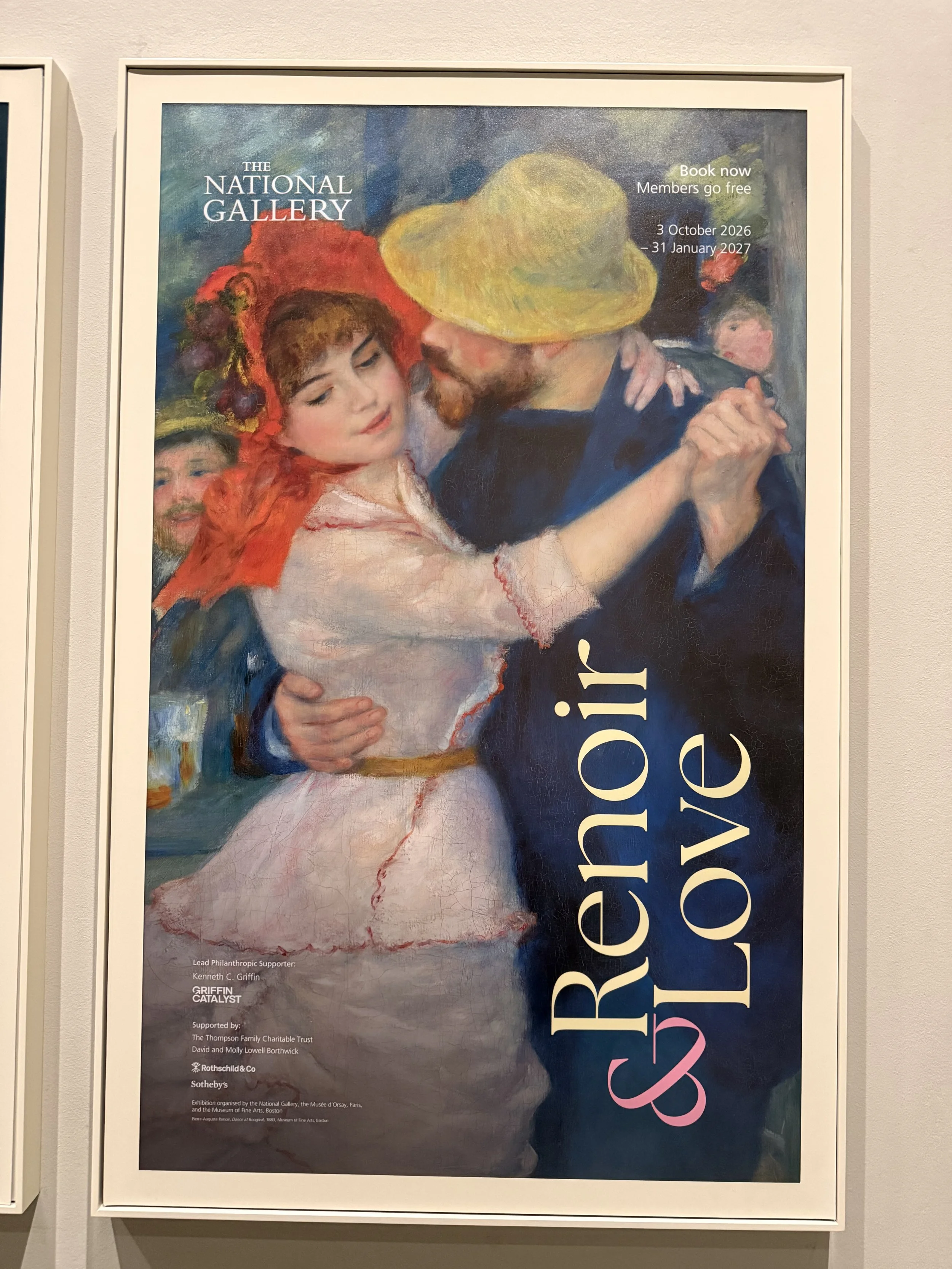
Poster for “Renoir & Love” at the National Gallery in London until January 31st 2027
You are probably already aquainted with the work of Pierre-Auguste Renoir. As a leading member of the Impressionist movement in Paris during the second half of the nineteenth century, Renoir is probably best known for his paintings celebrating the vitality, sociability and pleasures of Parisian life.
Although closely associated with Impressionism and its exploration of light, colour and atmosphere, Renoir focussed his attention also on the human figure, relationships and the emotional connections between people,
My own artwork rarely includes figures and I am more accustomed to finding inspiration in the natural world, observing the changing seasons, the rhythms of growth and decline, and the ways in which nature offers metaphors for human experience and connection; however I thoroughly enjoyed this exhibition and found much to away from it to apply to my own practice.
Looking at Renoir's paintings through the eyes of an artist, I found myself noticing not only his extraordinary technical ability but also his sensitivity to human relationships, his understanding of light and his fascination with the small, intimate moments that make up our lives.
Here are ten personal revelations and reflections I took away with me.
1. The extraordinary vitality of Renoir's brushwork
I was immediately struck by the energy and vitality of Renoir's brushwork. Brushstrokes appear relatively small in scale and the freedom, looseness and virtuosity with which he applies paint are really exceptional.
There is an extraordinary confidence in the way he creates a painting, often recomposing the composition midway through the painting, sometimes using impasto paint and occaisionally using paint directly from the tin tube ( available to artists from 1845) directly to the canvas.
Marks that might initially appear spontaneous come together to create a convincing sense of movement, atmosphere and form. Looking closely at the surface of his paintings is a reminder that the physical act of painting can itself carry so much life and energy.
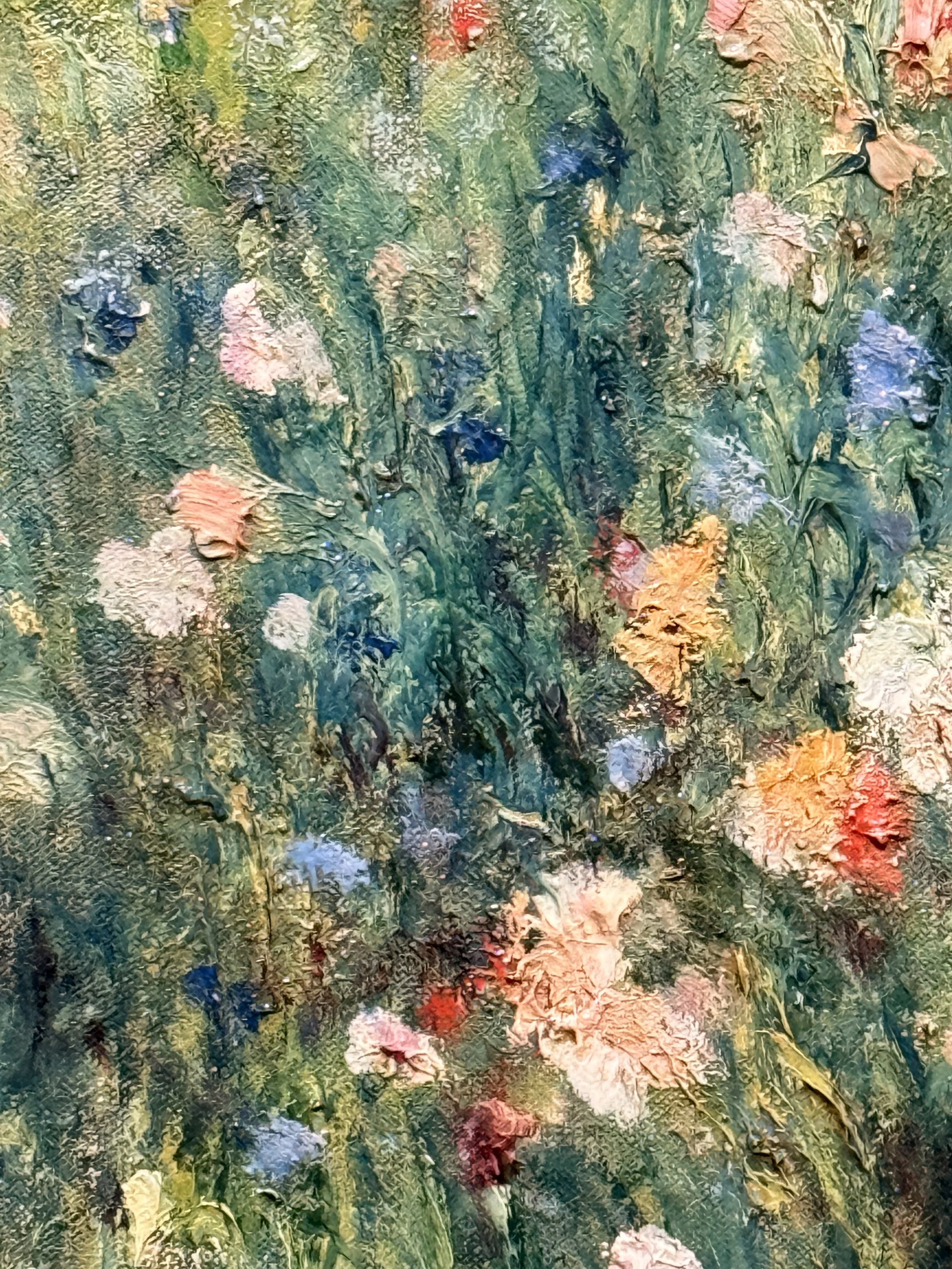
Detail from “A Summer Landscape” by Pierre-Auguste Renoir.
2. His adventurous use of colour and light
Renoir's understanding of colour was fascinating, particularly his use of some of the relatively new chemical pigments becoming available to artists at the time.
For example he used barium chromate, a pigment capable of producing a vivid “lemon yellow” in this painting as a transparent, tinted glaze, recreating the warm glow of the artificial illumination over the audience at the theatre.
Equally fascinating was his use of the newly available blue and mauve shadows. Rather than simply darkening an area, he introduced blue and purple transparent glazes over the solid colours to suggest the subtle interplay of reflected light, flushed skin and dappled sunlight.
It is a lovely reminder that shadows are rarely simply grey or black. They are alive with colour, atmosphere and reflected light.
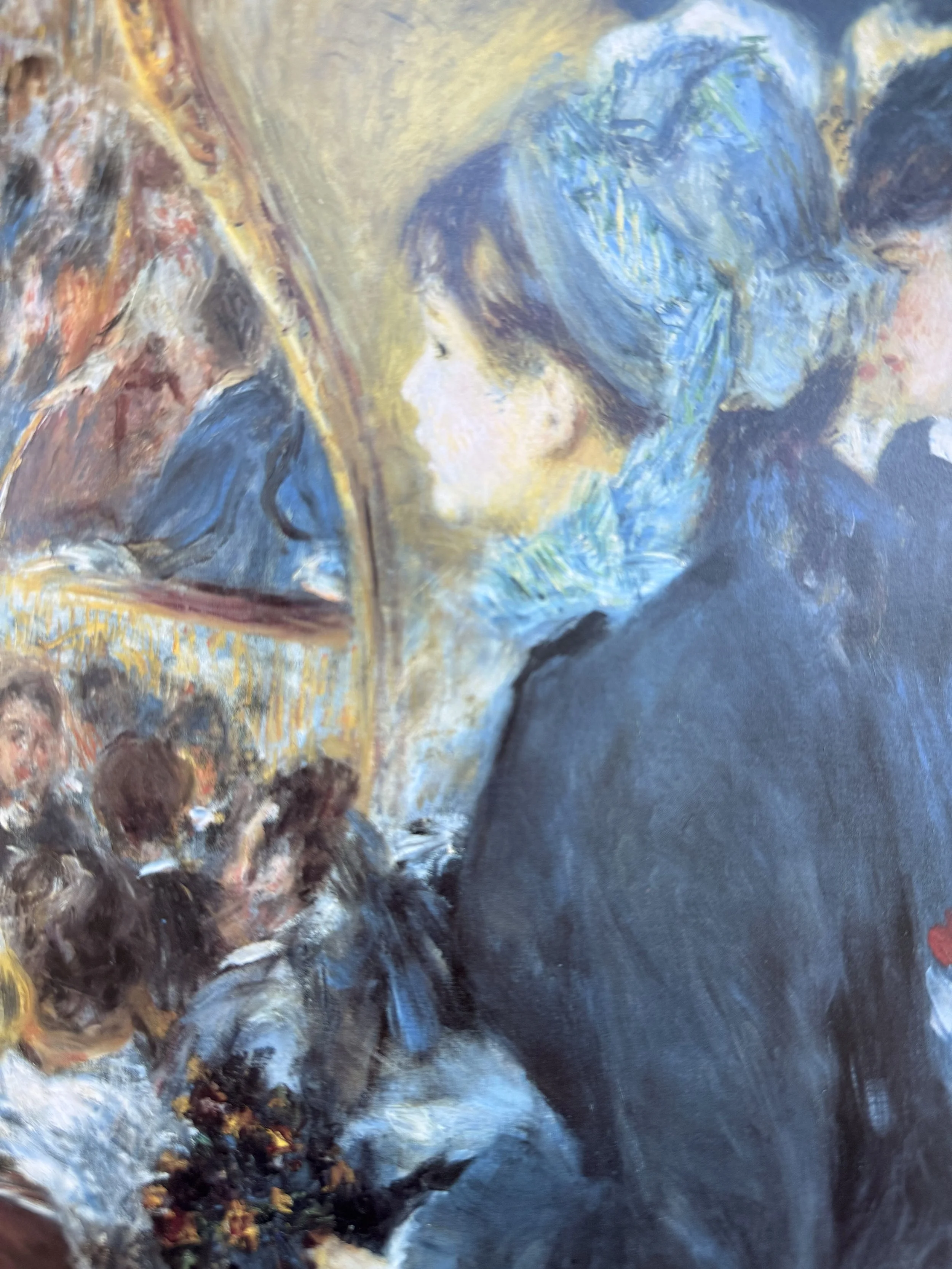
Detail from “At The Theatre” by Pierre-Auguste Renoir
3. The delicacy of skin, hair and human expression
Renoir's ability to manipulate paint to convey the softness and delicacy of skin and hair is remarkable.
There is something sensuous and tactile in the way he paints the human body. His brushwork captures softness without becoming overly descriptive, while his treatment of flesh tones create a sense of warmth and life.
Looking closely at details such as hands in “Dancing At Bougival” I was struck by the intensity of feeling which can be communicated through these acutely observed gestures. Renoir conveys emotion not simply through well observed drawing of what is depicted, but through his sensitive, intuitive manipulation of the paint itself.
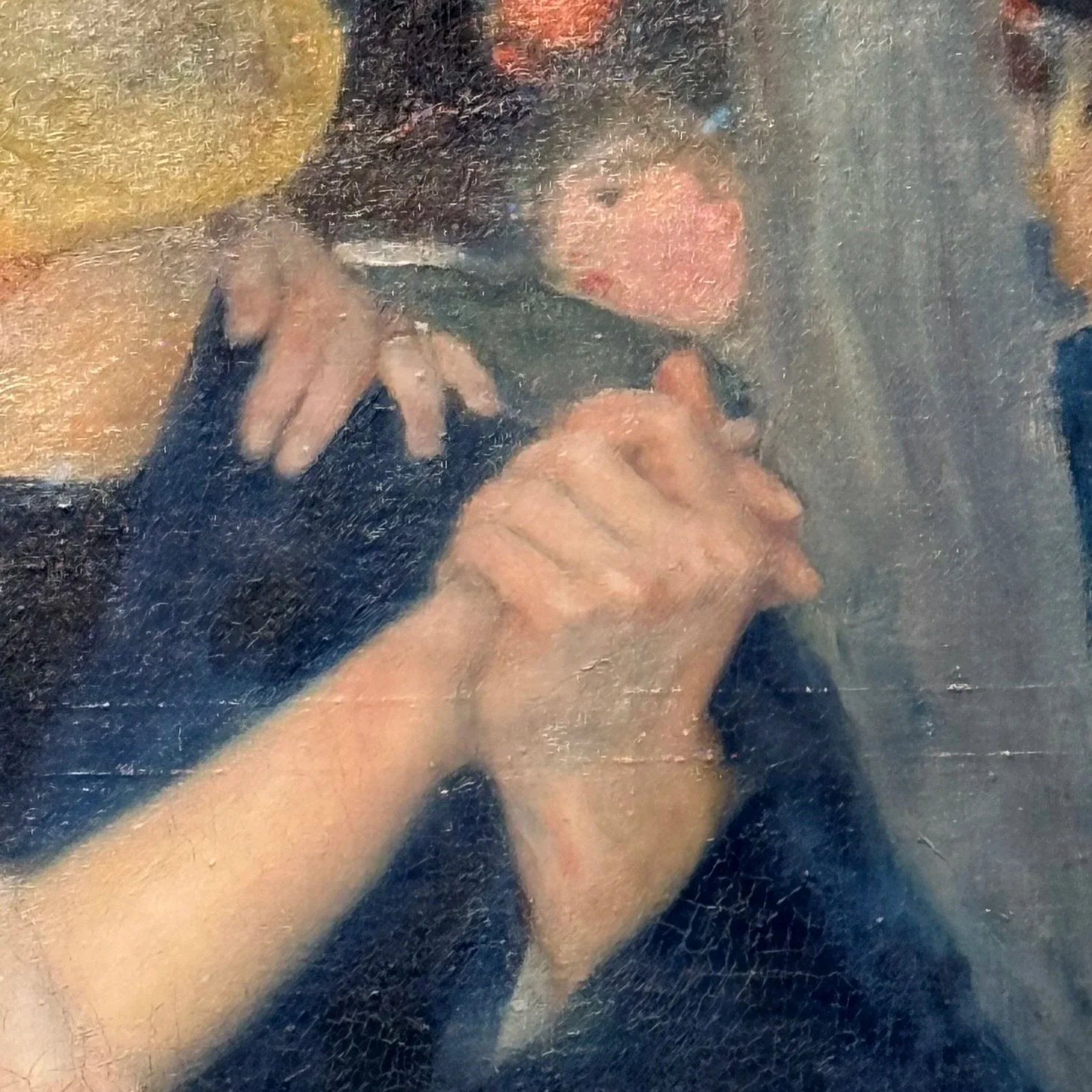
Detail of hands from the painting “Dancing At Bougival” by Pierre-Auguste Renoir
4. Painting love through a glance
One of Renoir's greatest strengths, I think, is his ability to capture affection between people.
He frequently painted friends, family members and lovers, and there is a wonderful tenderness in the way he observed human relationships.
Look closely at the faces. People exchange glances, look towards one another or become absorbed in another person's presence. These shared gazes create a powerful intensity within the composition.
There is often a story unfolding between the figures, but it is left for us to interpret.
It is this quiet communication exploring the unspoken language between people that makes so many of his paintings feel intimate, alive and relatable.
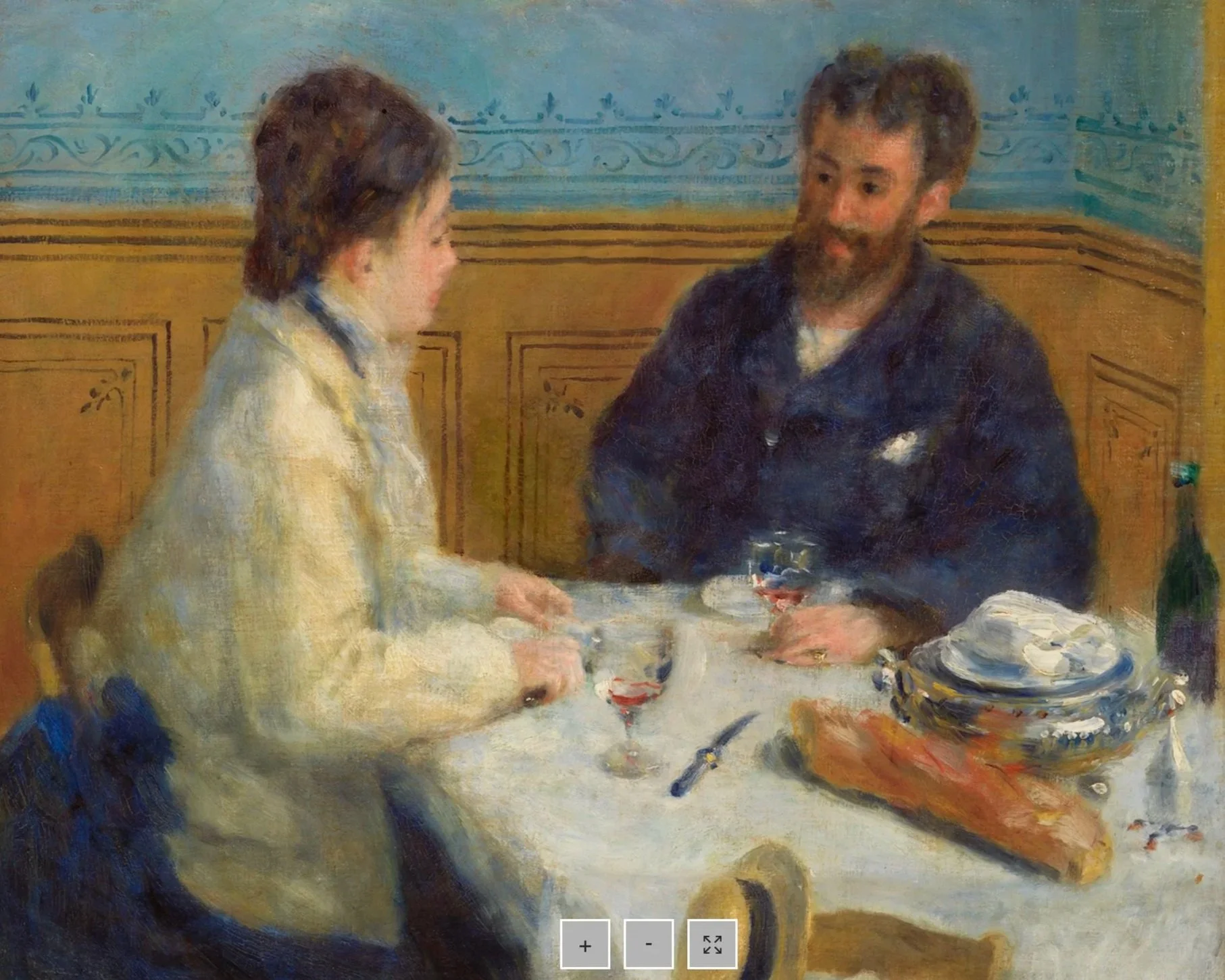
5. Renoir's fascination with the lives of women
Something that became increasingly apparent as I moved through the exhibition was Renoir's fascination with women and their experience of the world they inhabited.
His paintings offer us glimpses into the social lives and circumstances of women in nineteenth-century Paris. We see women meeting, socialising, working, dressing and navigating the possibilities and limitations of their society.
The significance of meeting a man, perhaps a potential suitor, or partner is observed and captured. Sometimes women were chaperoned; at other times, and more unusually they walked through the streets alone, risking social judgement simply by exercising a degree of independence.
For single women in particular, opportunities for respectable employment were limited, and the boundaries between social respectability and economic survival could be precarious.
I found myself looking beyond the beauty of the paintings to consider the social realities of the women depicted.
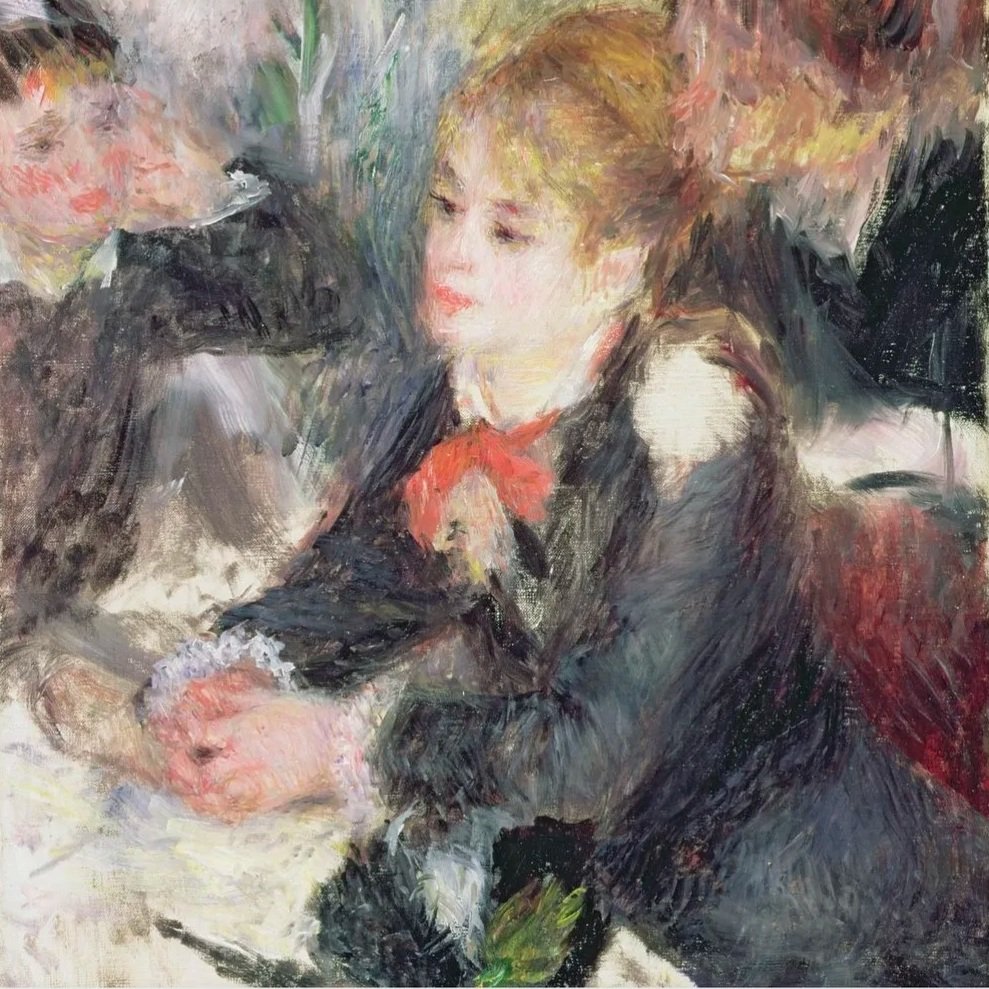
“At The Milliners” painting by Pierre - Auguste Renoir
6. Women, freedom and the constraints of society
This led me to think more deeply about the restrictions placed upon women during Renoir's lifetime and even today.
Although his paintings frequently celebrate female beauty and sociability, he shows us a world in which women's choices were constrained by social expectations, economic dependence and the demands of respectability.
There is sometimes a sense of women being confined by the circumstances of their lives, almost like birds in cages, beautiful, celebrated, admired but restricted.
Renoir's own family circumstances add another dimension to this subject. His relationships and children, including children born outside marriage, form part of the wider context in which we might consider his observations of family and society.
I found these social and personal dimensions added an interesting layer to my experience of the exhibition.
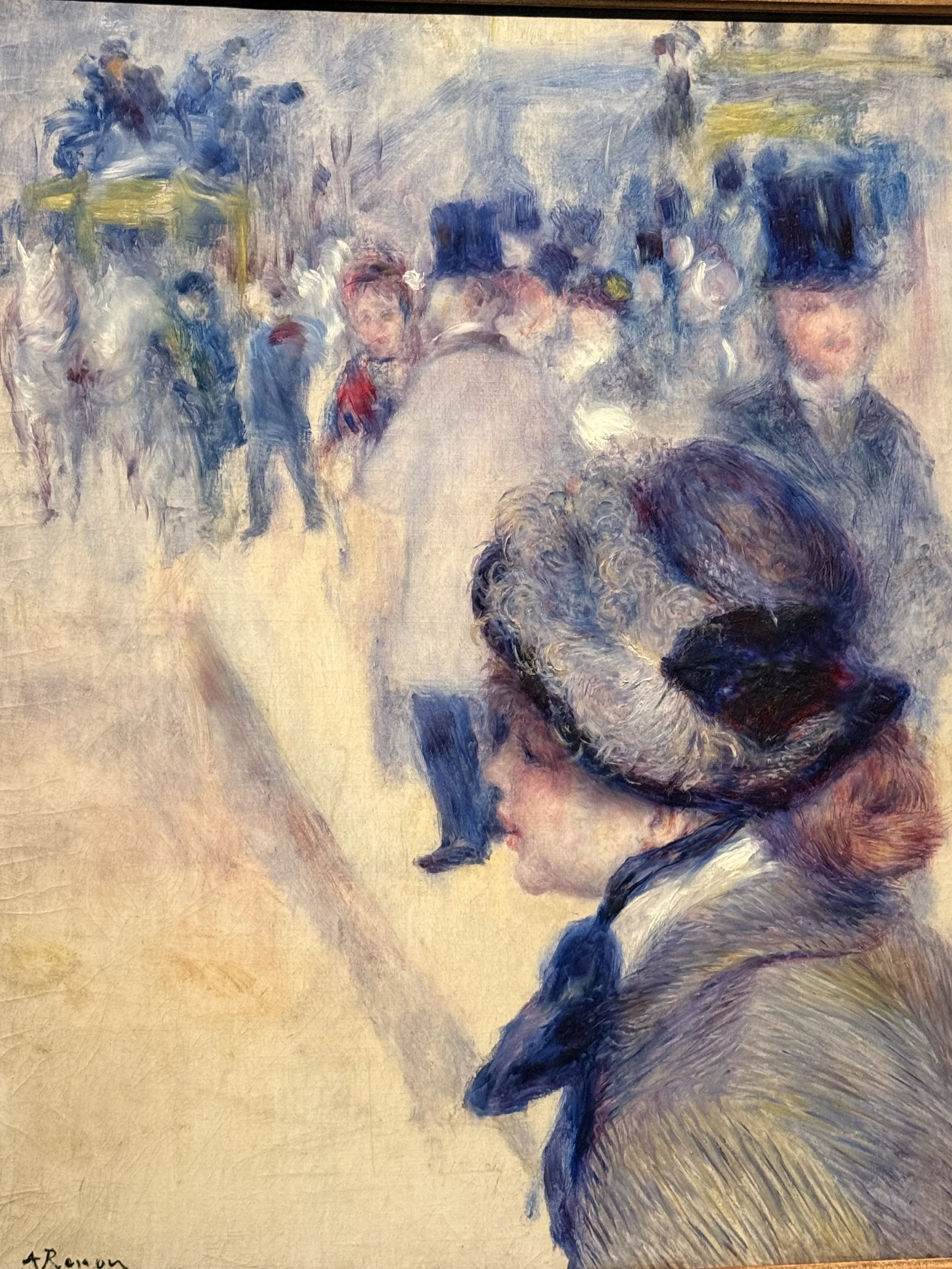
Detail depicting a young woman walking alone in a public space. The intimate viewpoint suggests a deliberate closeness to the subject, perhaps lending the scene a sense of vulnerability and quiet exposure."
7. When figures become part of the landscape
Some of my favourite pieces were those in which Renoir's figures seem to merge with the natural world around them. This is where I felt the strongest connection with my own artistic interests.
The figures are not simply placed in front of a landscape “backdrop”; they become part of it. Light falls across their bodies in the same way that it illuminates the trees, foliage and surrounding scenery. The shimmering effects of sunlight and shadow unite the human and natural worlds. There is no hard separation between the two.
I find this particularly beautiful because it reflects something I often explore in my own work: the interconnectedness of nature and living things. Nature not merely as a backdrop to human experience but part of it, shaping our lives through unpredictability, rhythms and cycles.
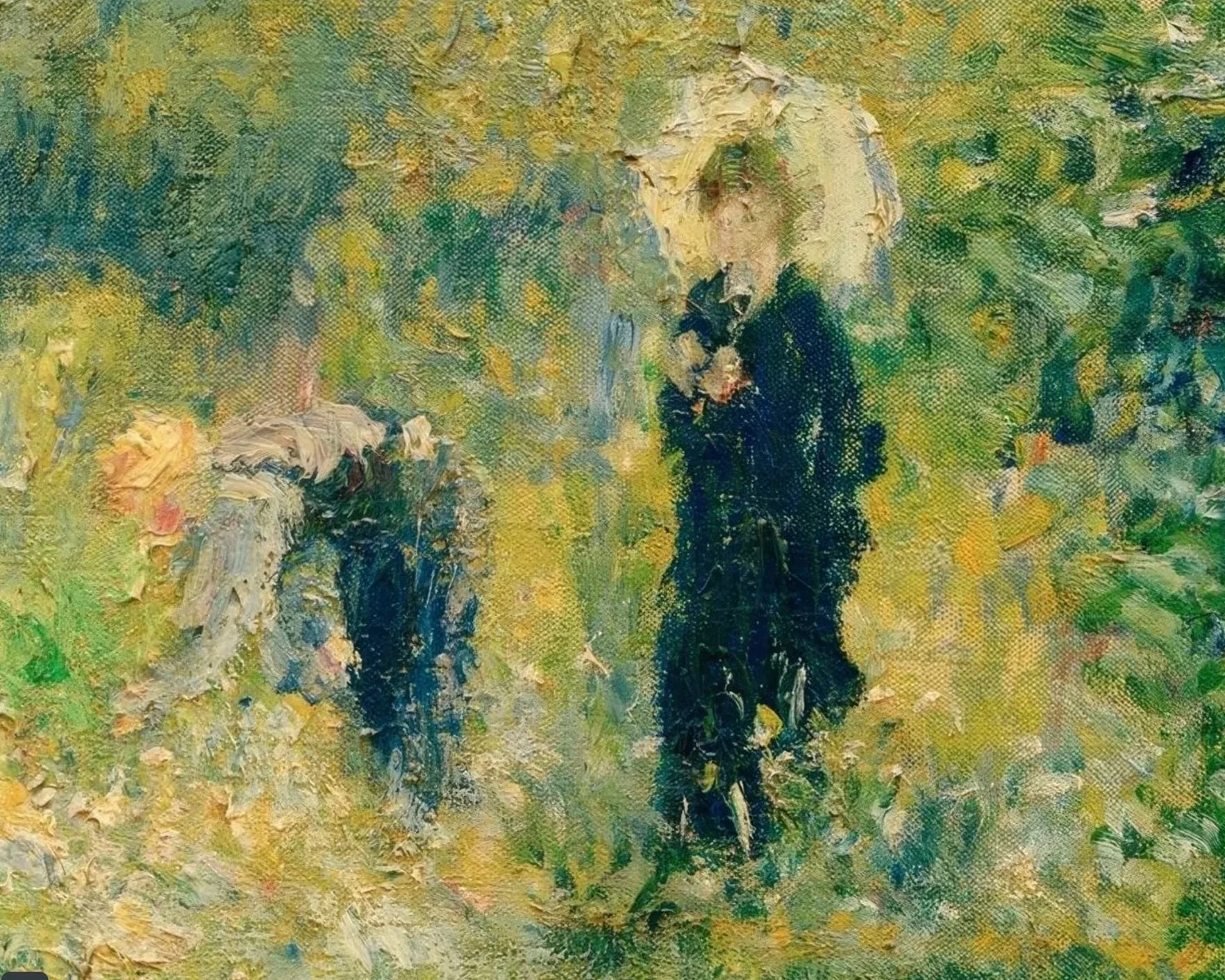
Detail of “Summer Landscape” by Pierre-Auguste Renoir
8. Love extends to our animal companions
Another delightful discovery was Renoir's attention to the affection of Parisians for their pets.
Dogs and cats appear throughout his paintings, sometimes held tenderly in a woman's arms, sometimes quietly accompanying their owners.
I particularly enjoyed noticing the dog in “Mother Anthony’s Tavern” depicting a serious conversation between male friends. While the men engage with one another, it is Toto, (the three legged dog with a wooden leg ) who’s gaze seems to greet us. He is clearly an important member of the gathering!
Renoir gives these animals the same careful artistic attention as his human subjects. Their expressions, personalities and presence are observed with sensitivity as is the love bestowed upon them by their owners.
It is a lovely reminder that human connection extends beyond our relationships with one another. Our bonds with animals can be equally meaningful, offering companionship, affection and a sense of belonging.
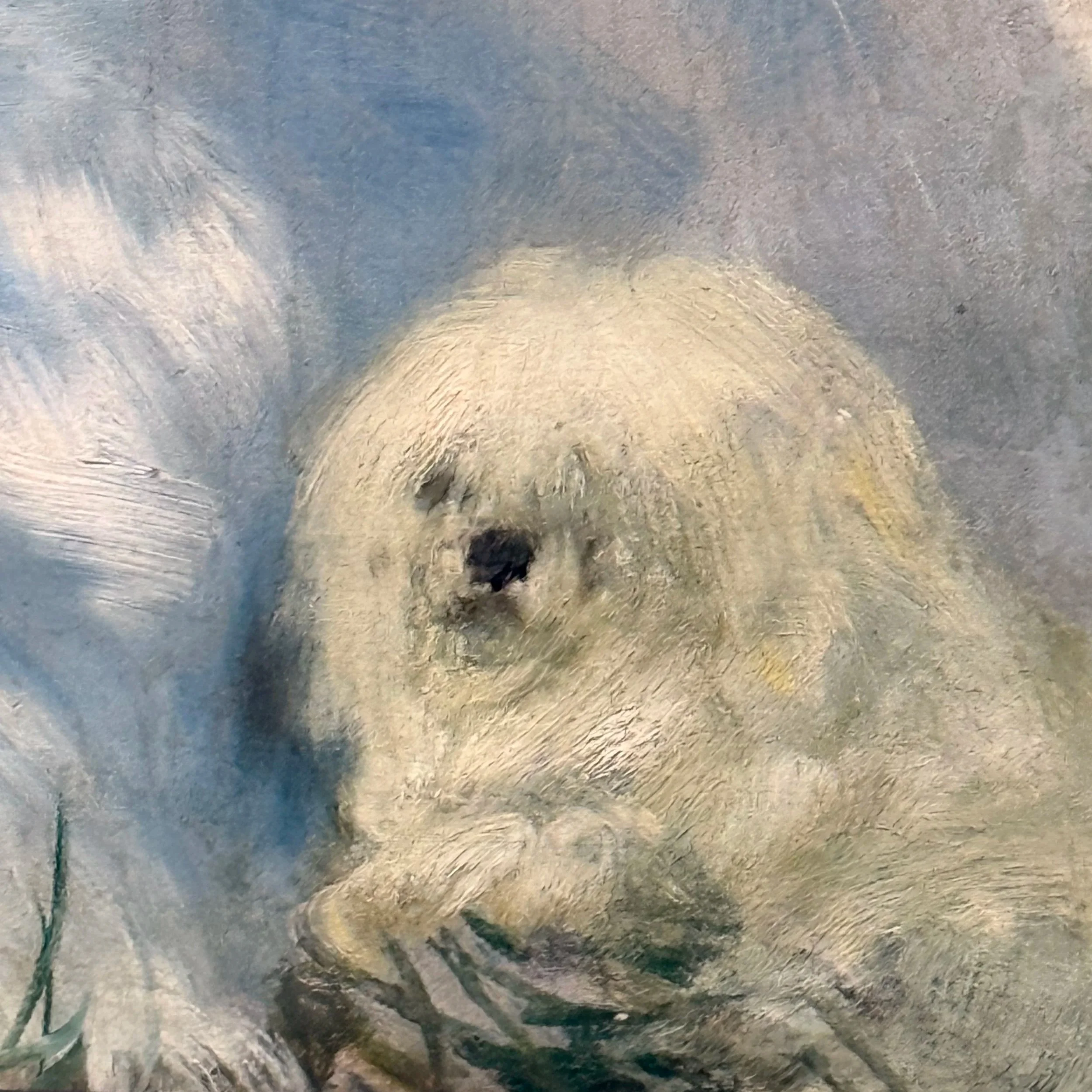
Detail of a dog. by Pierre - Auguste Renoir.
9. Celebrating the natural beauty of the female form
I was also struck by Renoir's celebration of the female body. The women he paints are often rounded, soft and wonderfully full of life. Their beauty is not dependent upon an unrealistic ideals.
They are painted with warmth and generosity, their bodies natural and celebrated as such.
I found this refreshing. There is something very appealing in current times about an artist who appreciates the human form without seeming to impose the restrictive expectations of our current beauty culture.
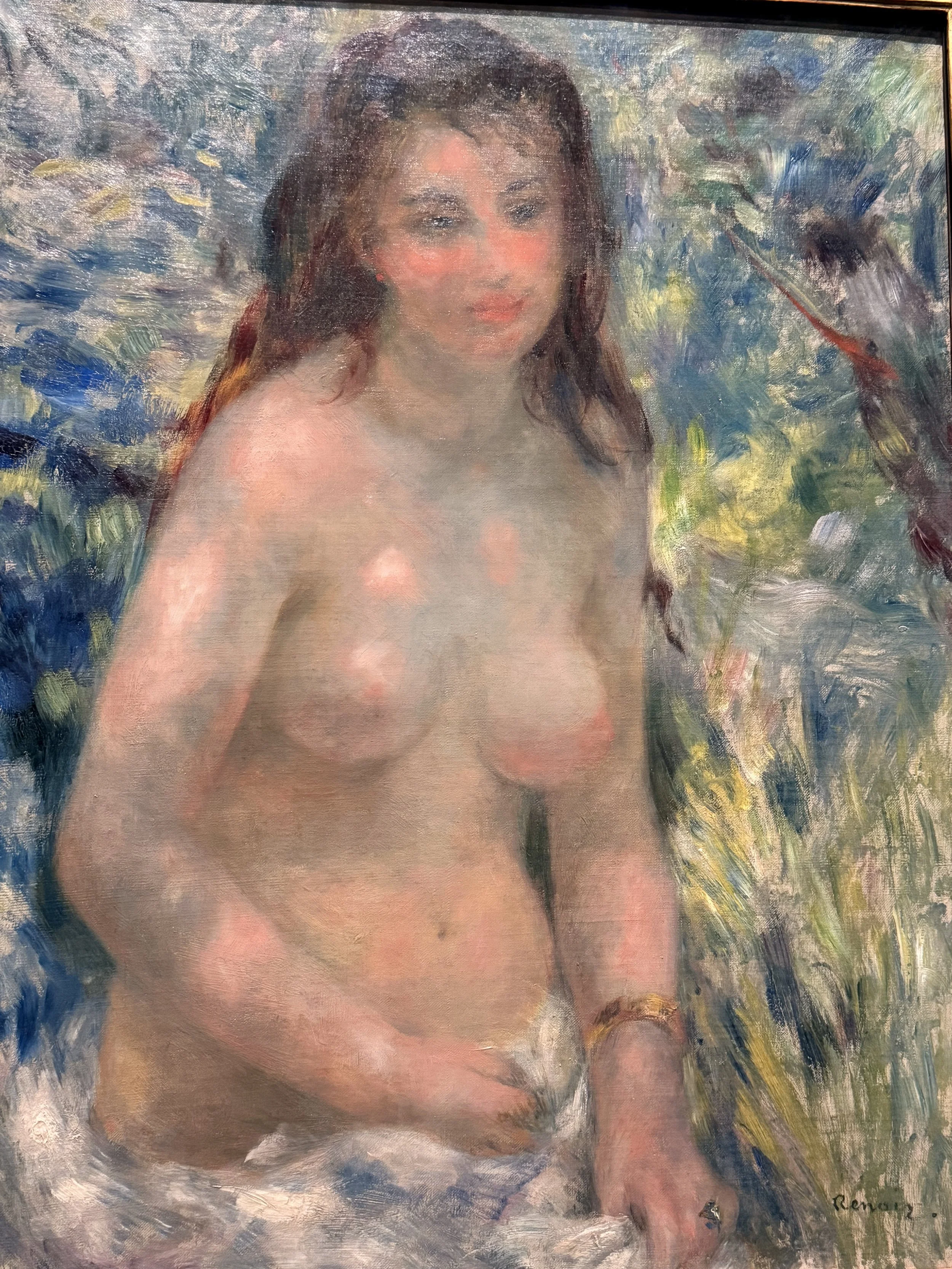
Detail of a female nude by Pierre-Auguste Renoir
10. The celebration of family and everyday connection
Finally, Renoir's celebration of family life and human relationships.
Mothers and children, fathers and sons, brothers, lovers, friends and even pets all feature as subjects.
He finds beauty not only in grand romantic gestures or dramatic events, but in the ordinary moments of domestic life. A shared glance, a tender embrace, a child sitting beside a parent, the quiet pleasure of spending time together, these everyday experiences are observed and preserved with extraordinary sensitivity.
His paintings remind us that our lives are shaped and enriched by these small interactions. They are the threads that connect us to one another and give meaning to our experience.
Perhaps this is what I loved most about the exhibition: beneath all the colour, light and beautiful brushwork lies a profound appreciation of human connection.
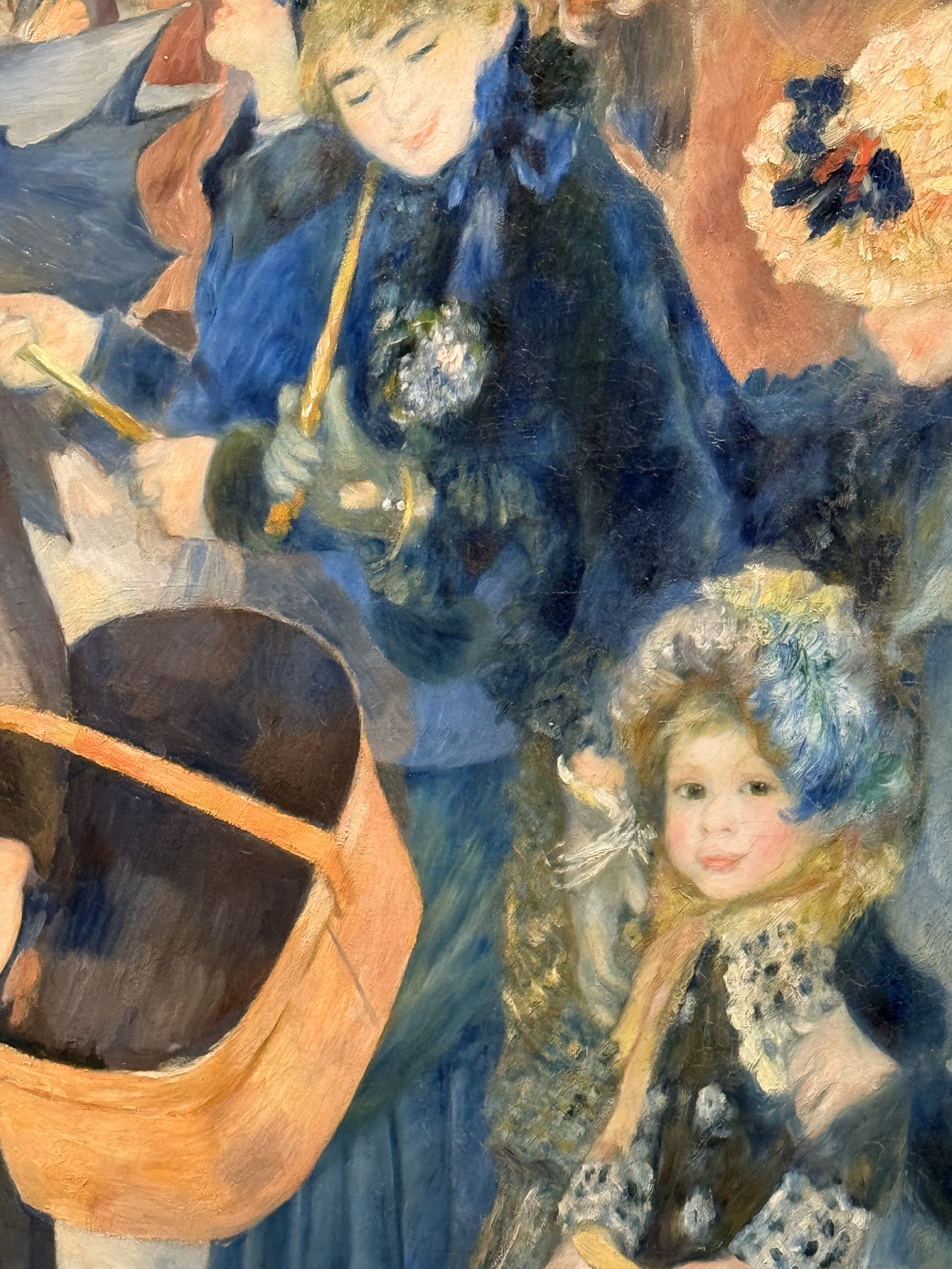
Detail of painting By Pierre- Auguste Renoir
What Renoir reminded me about art, nature and the cycles of life
Although my own artistic practice takes a rather different direction, I left the exhibition feeling unexpectedly inspired.
Renoir's paintings reminded me that, whether we paint people or landscapes, we are ultimately observing life itself.
I am continually drawn to the natural world as a source of inspiration. Through the changing seasons, I find endless metaphors for our own experiences: growth, blossoming, maturity, decline and renewal.
A tree in blossom at the height of spring suggests new beginnings and possibilities. The richness of summer speaks of abundance and fulfilment. Autumn brings a quieter beauty, reminding us that letting go is also part of life. Winter, seemingly dormant, holds the promise of renewal.
These natural cycles mirror so many aspects of human experience and relationships. Just as Renoir found ways to convey love, affection and connection through his observations of everyday life, I look to nature to explore these same themes through colour, form, texture and the changing rhythms of the seasons.
Art, for me, is about looking closely, noticing the connections and finding ways to translate those observations into something that resonates with others.
Perhaps that is the greatest lesson I took away from Renoir is the importance of really looking, of noticing the beauty in the everyday and of remaining open to inspiration in unexpected places.
Do you look at the natural world in the same way?
Discover how nature inspires my art
If you have enjoyed these reflections on Renoir, I would love you to explore my website, and discover how I draw similar inspiration from the natural world.
Through my paintings, I explore the circles of life, finding metaphors for human connection in the changing seasons, the rhythms of growth and blossom, and the quiet beauty of decline and renewal.
Nature offers an endless language through which to express our shared experiences – our relationships, our transitions, our moments of joy and the inevitability of change.
Feel free to connect on Instagram - instagram @hindmarchjaneart
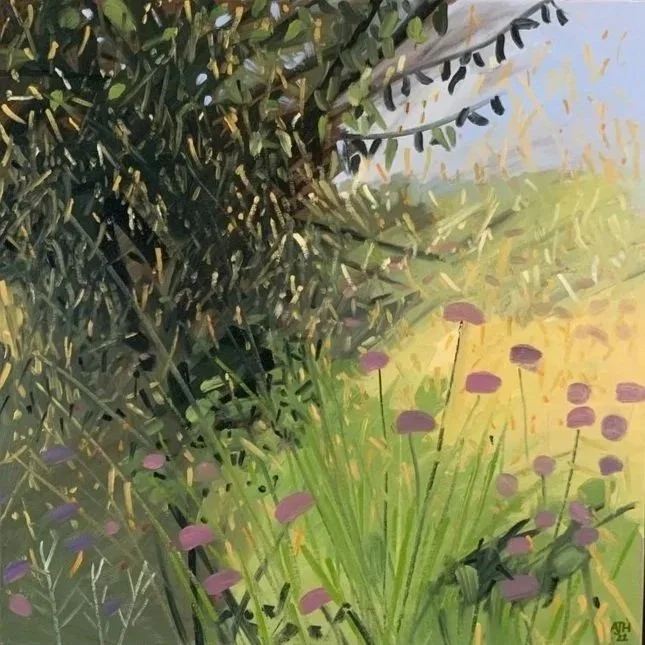
“Oat Grass Mist” Oil on Canvas original oil painting by Jane Hindmarch